J.D. Vance
Vice President (United States)
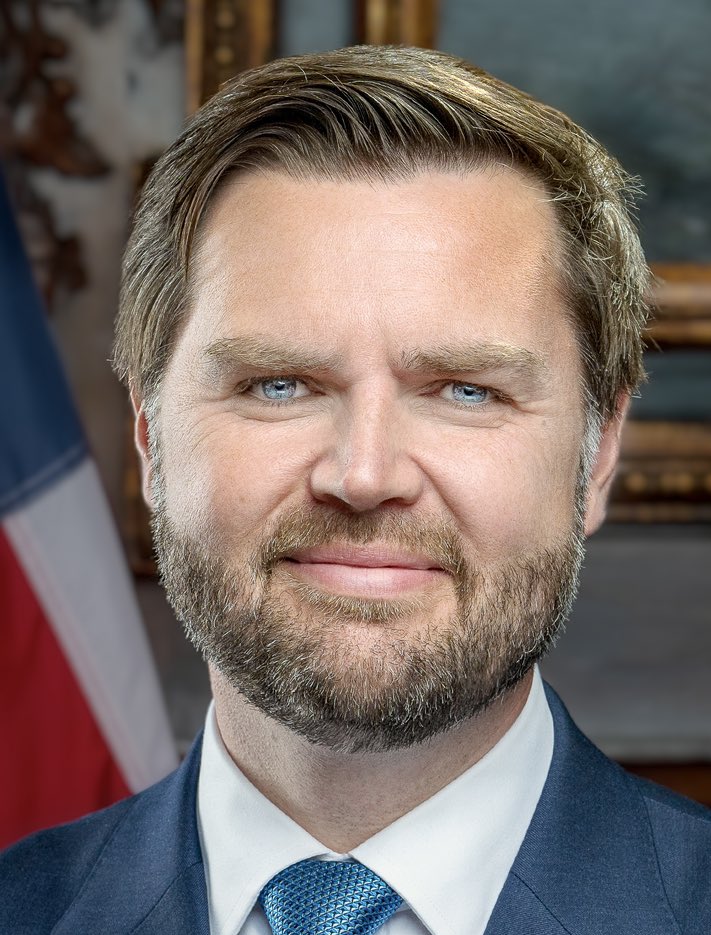
Supports the president's security policy line, participates in decision-making processes and represents the administration externally.
Background
J. D. Vance represents the vice presidential role at a time when the administration must maintain a consistent public line during a high tempo of operations. In practice, this means that the vice-president often acts as a political stabilizer: he reinforces, nuances or disciplines the message from the top.
Although the role is not operational command, it influences how strategic priorities are perceived. When the vice president communicates about goals and risks, signals are sent to both Congress, allies and domestic political opinion about which duration and cost axis the administration accepts.
Historical context
Historically, vice presidents in the United States have often been given more weight in foreign policy when the administration is in protracted security crises. They can act as a bridge between the presidential line and the wider political coalition that will carry the load over time.
In a conflict characterized by rapidly changing events, this bridge function becomes important. It helps to reduce the distance between political rhetoric, institutional planning and practical expectations in alliance work.
Role in Operation Epic Fury
In the Epic Fury context, Vance is relevant because he helps define the framework for what counts as success: rapid deterrence, gradual reduction of the opponent's capacity, or controlled transition to negotiation. This framework in turn affects how other parts of the administration communicate.
The role is also important in a scenario where operational friction increases the need for precise political explanation. The vice-president's message can then curb over-interpretation, clarify objectives and help preserve political room for action in the face of new events.
Key risk factors
- That internal administrative communication appears different in tone and objectives.
- That rhetorical harshness increases without corresponding strategic clarification.
- That domestic political anchoring becomes too narrow in the case of a long-term campaign.
- Those partner countries interpret signals differently and reduce operational coordination.
What you should follow next
- Consistency between the president's and vice president's choice of words over time.
- Cost, duration and risk are explicitly discussed in public statements.
- How allies are referred to: as operational partners or political supporters.
- Signs that de-escalation is described as a realistic outcome, not just a rhetorical possibility.
- Whether the message changes after major single events.
Analytical summary
Analytically, Vance should be followed as an indicator of the administration's political coherence. When his line is consistent with the president, defense and diplomacy, the likelihood that the strategy is actually coherent increases.
Last verified April 14, 2026: The role has been updated against open sources from the last few days (incl. the CENTCOM/UN track), with no publicly confirmed main change in role responsibilities.